TDEE Calculator
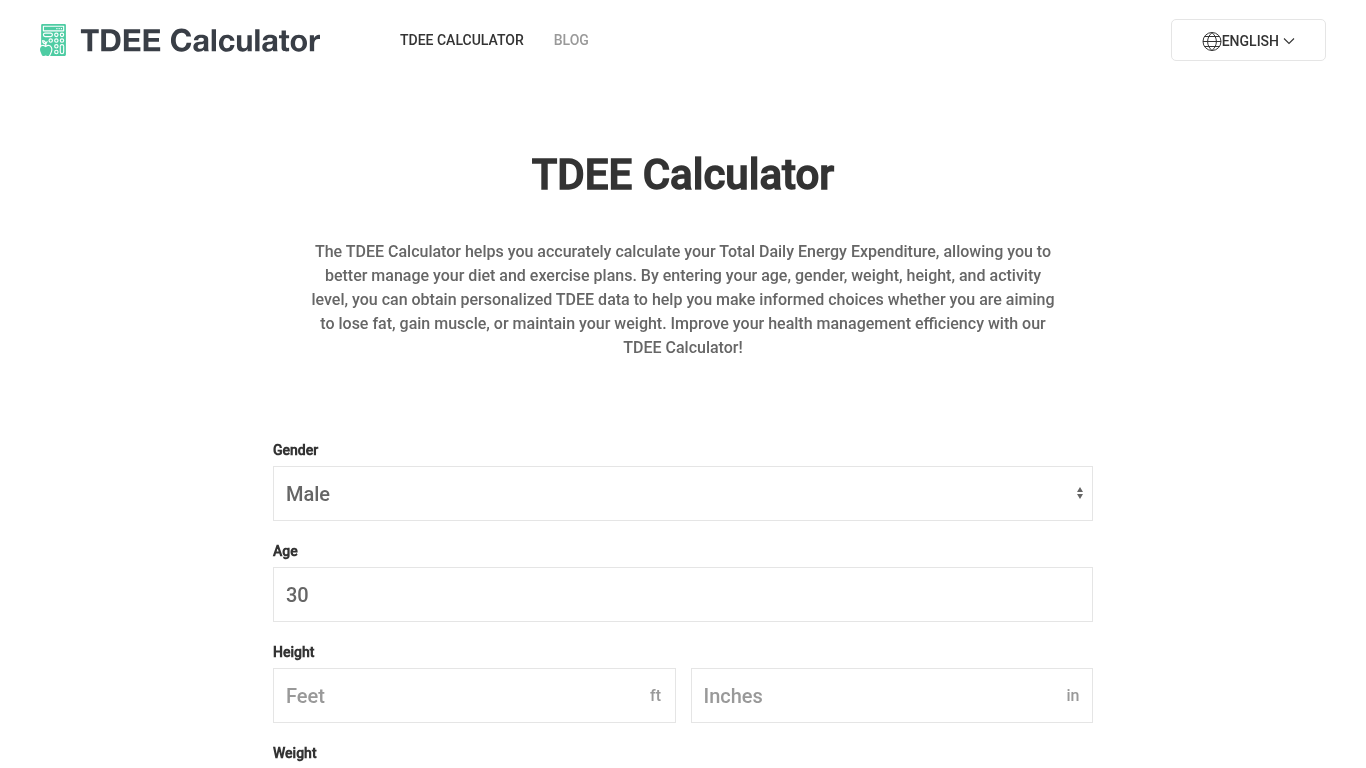
TDEE Calculator estimates your total daily calorie burn based on BMR, activity level, and lifestyle factors. Essential for weight loss, muscle gain, or maintaining optimal health.
What is TDEE Calculator?
TDEE Calculator is a specialized health tool that estimates Total Daily Energy Expenditure—the total number of calories an individual burns each day through basic bodily functions, daily activities, and exercise. This comprehensive calorie calculation provides the foundation for effective nutrition planning, whether goals involve weight loss, muscle gain, or weight maintenance. Understanding TDEE empowers users to make data-driven dietary decisions rather than guessing caloric needs.
The calculator serves fitness enthusiasts, dieters, athletes, nutritionists, and anyone interested in optimizing their health through proper nutrition. By providing personalized calorie estimates based on individual characteristics and lifestyle, TDEE Calculator removes uncertainty from nutrition planning. The tool transforms abstract concepts like metabolism and energy balance into concrete, actionable numbers.
How TDEE Calculation Works
Basal Metabolic Rate (BMR) Foundation
TDEE calculation begins with determining Basal Metabolic Rate—the calories your body burns at complete rest to maintain vital functions like breathing, circulation, cell production, and temperature regulation. BMR typically accounts for 45-70% of total daily calorie expenditure, making it the largest component. The calculator uses established formulas like Mifflin-St Jeor, Harris-Benedict, or Katch-McArdle to estimate BMR based on age, sex, weight, and height.
Different BMR formulas suit different populations—Mifflin-St Jeor works well for general populations, while Katch-McArdle provides superior accuracy for individuals who know their body fat percentage. The calculator often employs multiple formulas and averages results for balanced estimates. Understanding BMR helps users recognize that significant calorie expenditure occurs even without exercise.
Activity Multiplier Application
Once BMR is established, it's multiplied by an activity factor reflecting daily physical activity levels. These multipliers range from sedentary (little to no exercise, desk job) through lightly active, moderately active, very active, to extremely active (professional athletes or highly physical jobs). Activity factors account for both deliberate exercise and Non-Exercise Activity Thermogenesis (NEAT)—calories burned through daily movements like walking, fidgeting, and routine tasks.
Honest activity assessment is crucial for accurate TDEE calculation. Many users overestimate their activity levels, leading to inflated calorie estimates and hampered weight loss efforts. The calculator typically provides detailed descriptions of each activity level, helping users select the most accurate category. Conservative estimates usually yield better results than optimistic ones.
Additional Energy Components
Beyond BMR and activity, TDEE includes the Thermic Effect of Food (TEF)—energy required for digestion, absorption, and processing nutrients. TEF typically accounts for roughly 10% of total caloric intake, though this varies by macronutrient—protein has higher thermic effect than fats or carbohydrates. Some advanced calculators factor in TEF explicitly, while others incorporate it within activity multipliers.
Other factors potentially influencing TDEE include physiological states like growth, pregnancy, lactation, and recovery from illness or injury. These special conditions increase energy requirements beyond typical calculations. Advanced implementations may ask about these factors to provide more personalized estimates.
Using TDEE for Goal Achievement
Weight Loss Applications
For weight loss, users aim to consume fewer calories than their TDEE, creating a caloric deficit that forces the body to burn stored fat for energy. A deficit of 500 calories daily theoretically produces one pound of fat loss weekly, though actual results vary by individual. TDEE Calculator provides the baseline number from which users subtract appropriate calorie amounts based on desired loss rates.
The tool helps prevent excessive calorie restriction—a common counterproductive approach. Drastically low-calorie diets slow metabolism, cause muscle loss, and prove unsustainable long-term. TDEE-based planning enables moderate, sustainable deficits that preserve muscle mass while steadily reducing body fat. Evidence-based approaches yield better results than crash diets.
Muscle Gain and Bulking
Athletes and bodybuilders aiming to build muscle consume calories above TDEE, providing energy surplus for muscle protein synthesis and training intensity. Controlled caloric surpluses of 200-500 calories promote muscle growth while minimizing excess fat gain. TDEE calculation ensures these surpluses are appropriate rather than excessive.
The precision matters particularly during bulking phases where small surplus adjustments significantly impact muscle-to-fat gain ratios. Too large a surplus builds unnecessary fat requiring later cutting phases. Optimal surpluses based on accurate TDEE maximize lean mass gains. Data-driven nutrition supports efficient muscle building.
Maintenance and Recomposition
Eating at TDEE maintains current weight while allowing focus on nutrition quality, performance improvement, or body recomposition (simultaneous fat loss and muscle gain). Maintenance periods provide physiological and psychological breaks from caloric deficits or surpluses. Understanding TDEE helps users recognize appropriate calorie levels for weight stability.
Body recomposition strategies often involve eating at or near TDEE while optimizing protein intake and resistance training. TDEE provides the caloric framework around which macronutrient distribution is planned. Maintenance knowledge prevents unintentional weight fluctuations when goals shift from loss or gain to stability.
Additional Health Metrics
Many TDEE calculators provide complementary metrics beyond calorie estimates. BMI calculation helps users understand weight status relative to height. Ideal weight ranges suggest healthy targets based on frame size and sex. Macronutrient breakdowns show recommended protein, carbohydrate, and fat intake supporting specific goals.
These additional metrics create comprehensive health pictures rather than isolated calorie numbers. Understanding BMI alongside TDEE contextualizes nutritional needs within broader health frameworks. Macro recommendations ensure caloric intake distribution supports body composition goals effectively. Like our Password Analyzer provides comprehensive security metrics, TDEE calculators provide comprehensive health metrics.
Limitations and Considerations
TDEE calculations provide estimates, not exact measurements. Individual variations in metabolism, genetic factors, hormonal profiles, and metabolic adaptations mean actual calorie needs may differ from calculated values. The estimates serve as starting points requiring monitoring and adjustment based on real-world results.
Users should track weight trends over weeks rather than reacting to daily fluctuations. If weight isn't changing as expected despite following calculated calorie targets, adjustments may be needed. Some individuals have faster or slower metabolisms than formulas predict. Continuous feedback and iteration refine caloric intake toward personal optimal levels.
Professional Applications
Nutritionists and dietitians use TDEE calculators during client consultations for quick, accurate calorie requirement assessments. Rather than manual calculations prone to errors, professional tools provide instant results improving consultation efficiency. Showing clients their numbers real-time facilitates understanding and engagement with nutrition plans.
Personal trainers incorporate TDEE into comprehensive fitness programs, ensuring nutrition recommendations align with training demands and physique goals. Healthcare providers use TDEE estimates for medical nutrition therapy, weight management interventions, and patient education about energy balance. Professional validation of calculator methodologies adds credibility to self-directed efforts.
Free Access and Simplicity
TDEE calculators are typically free and require no registration, providing immediate access to personalized calorie estimates. The simple interfaces ask for basic information—age, sex, height, weight, activity level—and return comprehensive results within seconds. No technical knowledge or nutrition expertise required.
Free, unrestricted access removes economic barriers to evidence-based nutrition planning. Anyone interested in understanding their caloric needs can access professional-quality tools instantly. This democratization supports public health by making nutritional self-assessment universally available.
Related Products

Learn From Real Entrepreneurs Who Won Their First 100 Customers

Generate Authentic Japanese Names with Cultural Meanings Instantly

Ultimate 4-Letter Word Finder for Games and Puzzles
Get Updated With The Latest Updates
Discover, use, and share the best tools for creators, developers, and entrepreneurs