Cloud Repatriation: Why Companies Are Leaving AWS for Bare Metal in 2026
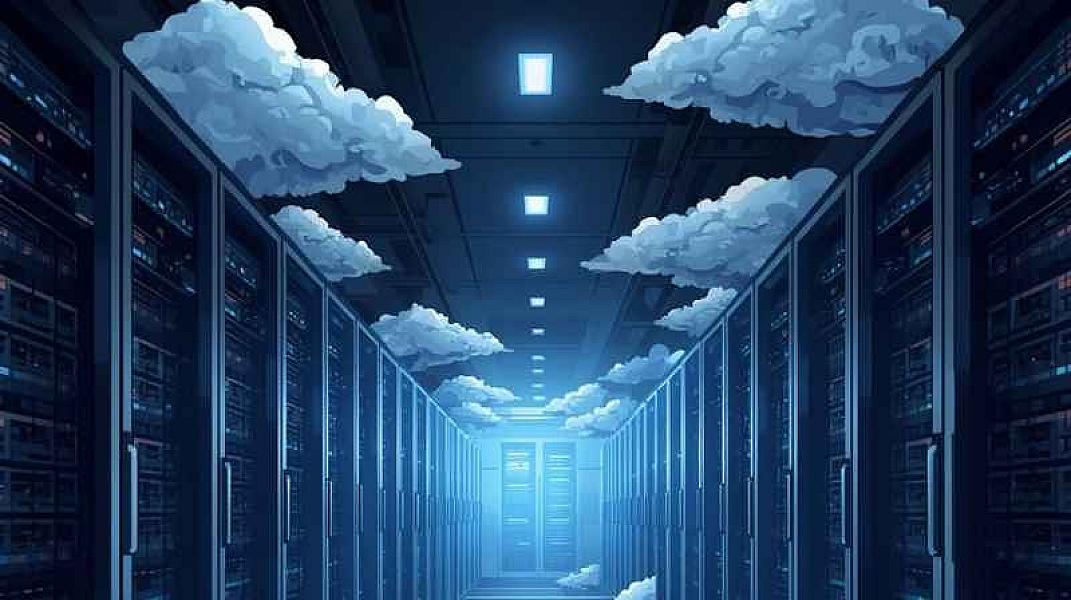
The Cloud Exit is real. Read the story of a company that saved $4M a year by buying their own servers. Is the Public Cloud era ending?
The Sticker Shock of Success
"StreamLine," a video processing API service, started like every other startup in 2020: on AWS. using S3 for storage, EC2 for compute, and RDS for database. It was frictionless. They didn't have to hire a network engineer; they just swiped a credit card. For the first three years, it was paradise. Their bill went from $500 to $5,000 to $50,000 a month. They celebrated the bill increases because it meant they were growing.
But in 2026, StreamLine wasn't a startup anymore. They were processing petabytes of video data. Their monthly AWS bill hit $850,000. That's ten million dollars a year. The CFO, Maria, called an emergency meeting. "We are spending more on Amazon than we are on our entire engineering payroll," she slammed the P&L on the table. "We are effectively just a reseller for AWS. We do the work, they take the margin."
The problem wasn't that AWS was "bad"; it was that the markup on cloud services is astronomical at scale. The cost of bandwidth (Data Egress) in the cloud is often marked up by 3000% compared to wholesale dark fiber rates. The cost of a vCPU is 4x the cost of buying the physical chip. StreamLine was paying a "Convenience Tax" for flexibility they no longer needed. Their workload was stable and predictable. They didn't need to spin up 10,000 servers in a minute; they just needed 1,000 servers running 24/7.
The Great Migration Back to the Basement
StreamLine made the decision to "Repatriate." They leased a cage in a colocation facility (a physical data center) in Virginia. They bought their own racks, their own Dell servers, and their own switches. The capital expenditure (CapEx) was $3 million upfront. To a startup, that sounds scary. But Maria did the math: the $3 million investment would depreciate over 5 years. The monthly operating cost (OpEx) for power and rack space was only $50,000.
The Cloud Math:
- AWS Annual Cost: $10,000,000
- 5-Year Total: $50,000,000
The Bare Metal Math:
- Hardware CapEx: $3,000,000
- Colo OpEx (5 years): $3,000,000
- Salaries for 3 Sysadmins: $2,500,000
- 5-Year Total: $8,500,000
The savings were forty-one million dollars over five years. It wasn't just a saving; it was a company-saving pivot. StreamLine became profitable overnight simply by changing where their code ran.
The migration itself was grueling. They had to relearn "forgotten arts" like managing IP subnets, replacing failed hard drives, and configuring BIOS settings. They hired grey-bearded sysadmins who had been ignored during the "Serverless" hype cycle. But the performance gains were also shocking. Without the "Virtualization Tax" of the cloud hypervisor, their bare metal servers ran 30% faster.
The "Base Load vs. Burst" Hybrid Model
Cloud Repatriation isn't all-or-nothing. The smartest companies in 2026 are adopting a true hybrid model with Cloudways.
They run their "Base Load" (the traffic they know they will always have) on their own cheap hardware in a Colo. They run their "Burst Load" (Black Friday spikes, viral TikTok moments) on the Public Cloud.
When traffic spikes, the application "spills over" to AWS. It's expensive for those few hours, but that's fine. You don't build a church for Easter Sunday; you build it for the regular Sunday and rent a tent for the overflow. AWS became StreamLine's overflow tent, not their primary residence.
Is it Time to Leave the Cloud?
Repatriation is not for everyone. If you are a seed-stage startup, DO NOT buy servers. You have no idea what you need. You need the flexibility to fail fast. Cloud is perfect for discovery.
But if you are spending more than $500,000 a year on cloud bills, you are likely burning money.
We built the Infrastructure Cost Analyzer (integrated into our standard FinOps tools) to help you run the "Rent vs Buy" analysis. It compares the TCO (Total Cost of Ownership) of AWS/GCP/Azure against Equinix/Hetzner bare metal.
The cloud was a great place to grow up, but for many mature businesses, it's time to move out and buy a house.
Rent or Buy?
Are you paying the Cloud Convenience Tax? Calculate your potential savings.